|
 |
|
|
|
|
EcoReef Modules: Fabrication & Assembly
|
|
|
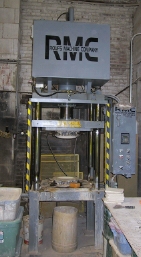
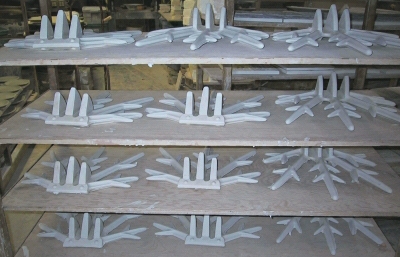
EcoReef™ modules assembled from six wedges, each bearing five spines. Each wedge is pressed from solid clay, using a 70 ton hydraulic press and special high-pressure molds (left). The wedges dry for two weeks before firing (right).
|
|
 |
|
 |
|
|
Hydraulic clay press.
|
Greenware wedges drying on racks.
|
|
|
|
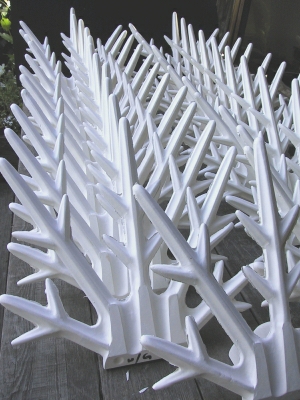
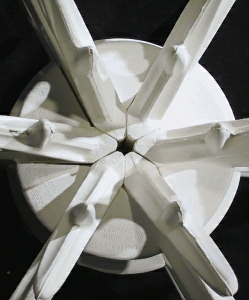
The advantage of hydraulic clay pressing is the ability to mass produce a high-density ceramic piece and achieve uniform geometry (left). This allows the wedges to accurately mate on their joining surfaces to form the module (right).
|
|
|
 |
 |
|
|
Module top view. On site, six wedges mate together (like orange slices) to form one module. Wedges are attached using an underwater epoxy. The axial hole accepts an optional rebar anchor.
|
|
|
|
A batch of wedges, fresh from the kiln and ready for packing. Wedges are flat packed on pallets and shipped ex works in 40' containers.
|
|
|
|
|
|
|
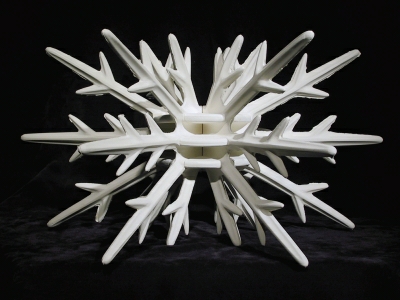
Horizontal view of module, showing space filling spines and shaded areas.
|
|
|
|
 |
|
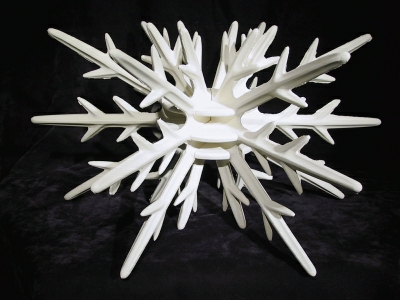
Upper view of module, showing upper surface spines.
|
|
 |
|
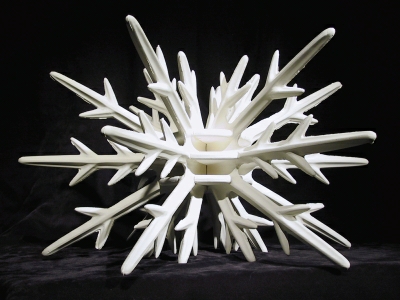
Lower view of module, showing how spines form supporting and stabilizing legs.
|
|
 |
|
|
|
|
|
|
© 2001 EcoReefs™, USA. All rights reserved.
This site is protected by copyright, trademark, and patent laws under U.S. and international law.
No part of this site may be reproduced without the express permission of
Michael D. Moore, Ph.D., President, EcoReefs™
|
|
|
|
|
|
|
|
|
|
|
|
|
|
|
|
|